In my previous post, I mentioned that I believe there were two events that radically altered the earth’s environment. The first event was the original rebellion of man against God. That rebellion changed the earth from its utopian origins to its dystopian present, replete with destructive storms.
This first event was the precursor to the second event. After the first event, humanity moved forward in its “new normal.” A family became a clan, the clans divided and claimed new territory. Populations grew and generations passed.
Every person and every generation existed in the “new normal.” Each person’s death recalled the original rebellion. As the population expanded and generations passed, the story was changed or forgotten. As time passed, people grew more distant from God.
The Bible reports that after ten generations, God determined to judge the world’s population for its rebellion (and the details of his judgment can fill an entirely different post). He chose a global flood of waters as his means of judgment.
Giving 100 years of warning, he set aside one lone family to escape the judgment. The patriarch of this family, Noah, began to build a boat (as God commanded) to withstand and endure the judgment. He did so in a world that possibly, had never seen rain fall from the sky. Who knows what people thought of Noah or even said to him over that 100 years of ark-building. That no other people were allowed to join him on the boat allows for the fair assumption that they likely reasoned that the world could never exist differently than how they had experienced it. Then the time arrived.
On the 17th day of the second month of Noah’s 600th year, waters fell from the sky an a way unprecedented in world history.
It would be inadequate to think only that it rained. Instead, imagine a drenching rain where you’ve sought refuge under a tarp, tent, or canopy. You see the canopy sag as it becomes water-logged. At first, a few beads of water soak through, dripping overhead. Then, suddenly, without warning, the canopy rips with a load tear and you are blanketed by a sheet of water that literally knocks you off your feet.
This is what the Bible says happened, except on a global scale. The Bible says that in the creation, God had blanketed the earth with a canopy of water. At this time of judgment, God released this canopy and its waters plummeted upon the earth. The volume of water overwhelming the earth is unimaginable, even in light of our modern-day comparative calamities.
Compounding the disaster, the Bible says that God caused the waters under the earth to spring forth. These were no bubbling brooks of natural springs. Its appropriate to think of violent earthquakes, oceanic volcanoes, and tumult that results in landscapes like Colorado’s Flatirons mountains. This was happening on a global scale. Oceans of waters from above. Geysers of waters from the ground.
Chaos.
With each new violent storm, we see a new library of videos of violent winds pushing walls of water, sweeping parking lots of cars into and then through buildings. Homes, offices, and stores instantly are deconstructed as the unrelenting force of the waves pushes against and ultimately over them. Stories are shared of a man being found on a roof six miles out in the ocean, or of a dolphin rescued one mile inland.
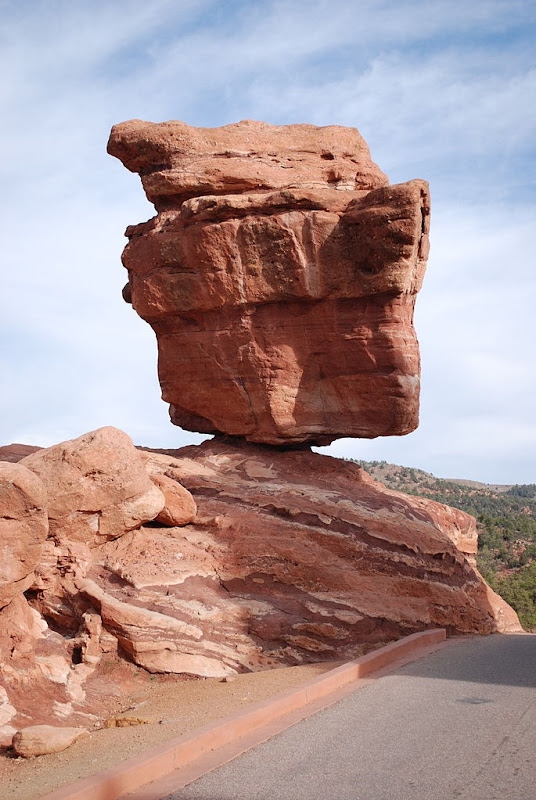
In light of this modern evidence, I have no problem reconciling why I will find an unbalanced boulder atop a mountain in the middle of the rockies, or sea life fossils in the middle of the continental land mass. In this, I see evidence of God using nature as a means of both judgment and new beginnings.
This summer, one of our community groups is being led through the first 15 chapters of Genesis by our groups pastors. They both happened to be on vacation this week, so I stepped in and taught Genesis 8. Here are my notes:
But God remembered Noah and all the beasts and all the livestock that were with him in the ark. (8:1a)
Remembered – This word can be a little distracting to us, but we must remember that the narrative exists for our benefit and for God’s glory. So this word that we translate as ”remembered,” is better understood as “turned his attention to.” Even this, though fails to fully capture the magnitude of what’s taking place, in that God isn’t multitasking in the way that you and I would multitask.
God is omnitasking…as he always does…giving his full attention to all matters at all times, simultaneously.
So when we see this “remembered,” and that he turned his attention to Noah etc., it’s not that he turned his attention away from something else. For us, as observers, we see God giving his attention to Noah.
This is why the “but” is a big deal…it serves as a counterpoint to what came before….so what came before? The flooding of the waters and the prevailing of the waters for 150 days (the 40 days of rain occurred within the 150. See 7:12 & 8:4)
And God made a wind blow over the earth, and the waters subsided. (8:1b)
Remembered – the remembrance of God is important for this detail, too, for a couple reasons. First, it seen in this word “and,” which connects that which follows to that which precedes it. This very act of wind blowing over the earth is not “just nature,” or coincidence. It is the deliberate, intentional act tied to the “giving full attention to.” This show that God is putting actions to the promises. In this regard, it evokes that understanding of Yahweh, the God of covenant relationship.
God, here, though is the Hebrew Elohim, and he is the same God of Genesis 1.
The Hebrew word for wind is ruah, which is the same word from Genesis 1 used for Spirit, where God’s Spirit hovered over the waters. Remember that the promise was to start anew with these people aboard this ark, and just as His Spirit had been present and active in the creation of the earth, He was actively at work delivering Noah and the surviving creation from these dangerous waters. This is the same wind that Moses would later witness driving away the plague of locusts in Exodus 10, and that would part the waters of the Red Sea delivinghis people onto dry ground in Exodus 15, and the same wind that would bring in quail in Numbers 11.
God regularly makes use of nature (see Joshua 10; Psa. 104:3-4)
The fountains of the deep and the windows of the heavens were closed, the rain from the heavens was restrained,3 and the waters receded from the earth continually. (8:2-3a)
This passage reverses the action of 7:11-12
all the fountains of the great deep burst forth, and the windows of the heavens were opened. 12 And rain fell upon the earth forty days and forty nights. (Ge 7:11–12)
At the end of 150 days the waters had abated, 4 and in the seventh month, on the seventeenth day of the month, the ark came to rest on the mountains of Ararat. 5 And the waters continued to abate until the tenth month; in the tenth month, on the first day of the month, the tops of the mountains were seen. (8:3b-5)
Exactly 150 days, 5 months to the day. It’s interesting that this very specific date has been included as a detail.
For whatever was written in former days was written for our instruction, that through endurance and through the encouragement of the Scriptures we might have hope. Exactly 150 days, 5 months to the day. It’s interesting that this very specific date has been included as a detail. (Romans 15:4)
Today, in the month of Abib, you are going out. (Ex. 13:4)
In the month of Nisan (Neh. 2:1)
This month shall be for you the beginning of months. It shall be the first month of the year for you. (Ex. 12:2)
When you come into the land that I give you and reap its harvest, you shall bring the sheaf of the firstfruitsof your harvest to the priest, 11 and he shall wave the sheaf before the Lord, so that you may be accepted. On the day after the Sabbath the priest shall wave it (Lev. 23:11)
Passover occurs on 14thof Nisan…Jesus was offered as our Passover lamb on the 14thof Nisan. Three days later, the morning after Sabbath after Passover is the Feast of First Fruits.
3 days after the Passover sacrifice, Jesus “waved” to the people… He truly is the first fruit of the Lord, the offering that makes us all accepted.14+3 = 17…This 7thmonth would eventually become the first month, and this day of the Ark landing aground offering mankind and all of creation a new beginning on the same day in advance that Jesus would do in full through his resurrection.
Note that this says in the mountains of Ararat, not Mount Ararat. The location of the ark has been a provocative matter of speculation for a long time, and continues to be now.
the Mountains of Ararat
And the whole earth was of one language, and of one speech. And it came to pass, as they journeyed from the east, that they found a plain in the land of Shinar; and they dwelt there. (Genesis 11:1-2)
Make rooms in the ark, and cover it inside and out with pitch. (Genesis 6:14b)
This would indicate that the descendants came from a region of Iran, not Turkey (the North).
What’s interesting is that the wood of the ark is covered inside and out with pitch (tar). There’s the functional aspect that it would be waterproof…and that it would be functional on the inside. The byproduct of it is that it is amazingly well preserved. It could be that someday, the testimony of the Ark still has more to say.
And the whole earth was of one language, and of one speech. And it came to pass, as they journeyed from the east, that they found a plain in the land of Shinar; and they dwelt there. (Genesis 11:1-2)
This would indicate that the descendants came from a region of Iran, not Turkey (the North).
Make rooms in the ark, and cover it inside and out with pitch. (Genesis 6:14b)
What’s interesting is that the wood of the ark is covered inside and out with pitch (tar). There’s the functional aspect that it would be waterproof…and that it would be functional on the inside. The byproduct of it is that it is amazingly well preserved. It could be that someday, the testimony of the Ark still has more to say.
While it took 40 days for the rains to fall, it took 5 long months for the waters to recede to the point where the new beginning could commence.
Isn’t this an apt picture of our calamities, too? How often do our calamities go away as swiftly as they come?
While we wait for it to “come to pass” where we can go forth again, don’t we feel like Noah and his captive family?
At the end of forty days Noah opened the window of the ark that he had made 7 and sent forth a raven. It went to and fro until the waters were dried up from the earth. (Gen. 8:6-7)
40 more days passed, and the waters continued to retreat.
He sent out this raven….there’s a couple interesting thoughts here, perhaps inspired.
First, the raven is an unclean bird. It is an eater of dead things. So it is reasoned that it could fly about and eat from the carcasses floating on the water surfaces.
Its ”flying to and fro” is indicative that the raven could likely fly longer than could a dove, and because it was good for neither food nor sacrifice, it was expendable. This language indicates being sent out repeatedly, not that it just flew and flew and flew until it found a place to land.
Also interesting, the raven is associated with the predicted desolation of Edom in Isaiah 34:11. Some scholars reason that the raven, therefore, is a picture of the impurities of the past being removed, and that creation indeed has a fresh new start.
Or, it’s just a raven.
a raven with a filthy habit
Then he sent forth a dove from him, to see if the waters had subsided from the face of the ground. 9 But the dove found no place to set her foot, and she returned to him to the ark, for the waters were still on the face of the whole earth. So he put out his hand and took her and brought her into the ark with him. 10 He waited another seven days, and again he sent forth the dove out of the ark. 11 And the dove came back to him in the evening, and behold, in her mouth was a freshly plucked olive leaf. So Noah knew that the waters had subsided from the earth.12 Then he waited another seven days and sent forth the dove,and she did not return to him anymore. (Genesis 8:8-12)
This dove serves as his eyes.
The dove, though, is both a bird associated with sacrifice and food. It is appropriate both as a burnt offering and as a sin offering. The dove is also a symbol presented in the Lament imagery, but also beauty and innocence. Where the raven was a picture of what was left behind in judgment, the dove is a picture of what is ahead in new beginnings., A dove would be included in the burnt offering (at the end of the chapter).
When at first the dove could find no place…the Hebrew word for place is monoah, derived from the Hebrew word for rest which is…Noah. (He will find rest). When the dove couldn’t find rest….Noah retrieved the dove himself….giving it rest. The dove, a picture of purity, is welcome.
After 7 days, he releases the dove again, and it returns with the first sign of life outside the ark. This is an indication that the earth had completed its season of destruction, and was creating anew. The olive leaf would have been significant to the early readers of this, for their awareness of the importance of the olive, the oil of which is used to fuel the menorah in the tabernacle, and anointed the tabernacle and furnishings. It was a plant with good, blessed connotations. Don’t miss, too, that both the oil and the dove are symbolic of the Spirit of God (the anointing of Jesus – Luke 4:18; Matt 3:16)
Finally, another week later, the dove is sent out a 3rdtime and doesn’t return, a proclamation of freedom to the ark’s inhabitants.
In the six hundred and first year, in the first month, the first day of the month, the waters were dried from off the earth. And Noah removed the covering of the ark and looked, and behold, the face of the ground was dry. 14 In the second month, on the twenty-seventh day of the month, the earth had dried out. (Gen. 8:13-14)
It has been almost a full year (see Genesis 7:11) 314 days. Noah had known about land, but he still couldn’t see it for himself. Yet, here, now, he sees it for himself.
Yet, it wasn’t until 370 (or 371 depending on your counting) that the ground was dry enough for the next events.
Then God said to Noah, 16 “Go out from the ark, you and your wife, and your sons and your sons’ wives with you. 17 Bring out with you every living thing that is with you of all flesh—birds and animals and every creeping thing that creeps on the earth—that they may swarm on the earth, and be fruitful and multiply on the earth.” 18 So Noah went out, and his sons and his wife and his sons’ wives with him. 19 Every beast, every creeping thing, and every bird, everything that moves on the earth, went out by families from the ark. (Gen. 8:15-19)
This divine message from God parallels the command to enter the ark (7:1).
We don’t have any indication that God spoke to Noah during the entire time he was in the ark.
Yet, we have Hebrews 11 telling us everything he did, he did by faith, and so we have no reason to suspect that he was somehow without faith while he waited on the Lord.
That is instructive to us in our waiting…
What do you do while you wait? Meet with God (James 1)
Eventually, according to God’s timing, God speaks.
The language of 18-19 also parallels the entrance, but it is indeed pointing forward to the blessing of repopulation.
Then Noah built an altar to the Lord and took some of every clean animal and some of every clean bird and offered burnt offerings on the altar. 21 And when the Lord smelled the pleasing aroma, the Lord said in his heart, “I will never again curse the ground because of man, for the intention of man’s heart is evil from his youth. Neither will I ever again strike down every living creature as I have done. 22 While the earth remains, seedtime and harvest, cold and heat, summer and winter, day and night, shall not cease.” (Gen. 8:20-22)
We have information here of Noah building the altar and sacrificing clean animals of every kind…before the law was given. This indicates a superintentionof God to illuminate Noah on these matters.
Worship had existed clear back to Cain and Abel, but here we see an altar built for this purpose. And the worship was directed to the Lord.
God responded positively to this act of worship.
Compare 8:21 with 6:5 – The Lord saw that the wickedness of man was great in the earth, and that everyintentionof the thoughts of his heart was onlyevil continually.
We continue to have a sin problem – it has ruled us since Adam.
Yet, God makes 2 vows – not to despise man (though we haven’t changed, cannot change)…and he will not destroy us.
Instead, God promises regular predictable weather and seasons and provision.
parallels in the creation account and the re-creation account. This graphic was a nightmare to produce.




 B-log
B-log 